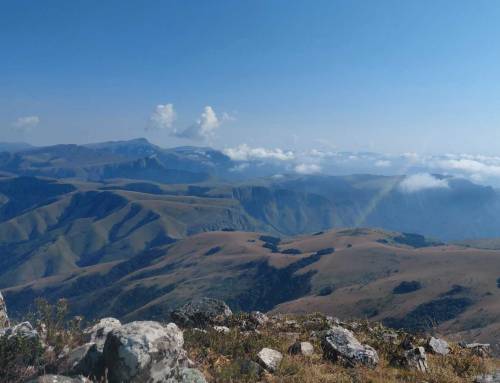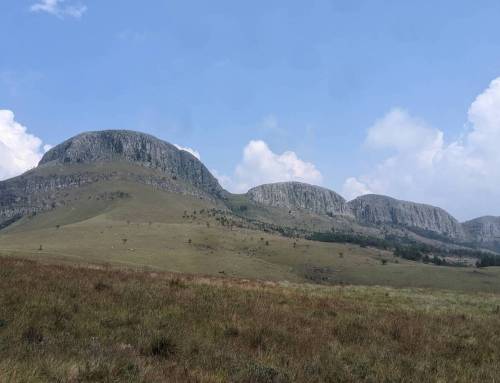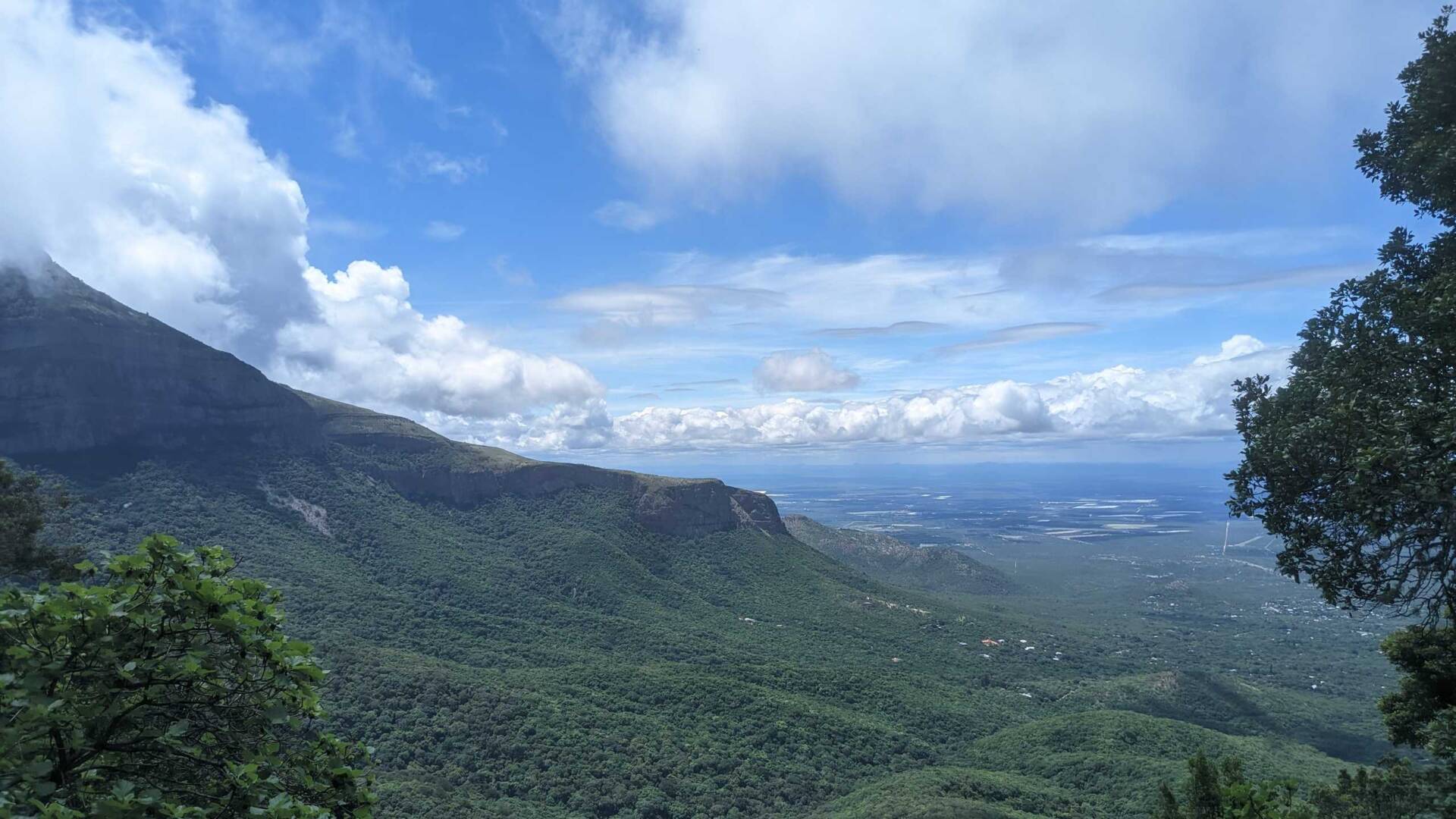
From Hoedspruit looking to the South-West, you’ll see the escarpment in the distance, with the Mariepskop mountain taking center stage. Houses and lodges are built pointing towards this view of the mountains, yet somehow, for some reason, most locals won’t ever hike up there. When they do, it usually involves a drive around the mountain and up the pass for some easier hiking through the forest. Totally fair, but personally, the best way to get up there is on foot. Starting in the town of Kampersrus, there is a steep trail that will take you all the way up to the forest, and from there, you can choose and pick your own adventure. However, this start with a 700m climb in the first 4 kilometers is quite the challenge. And yet, this was exactly the plan for this dayhike.
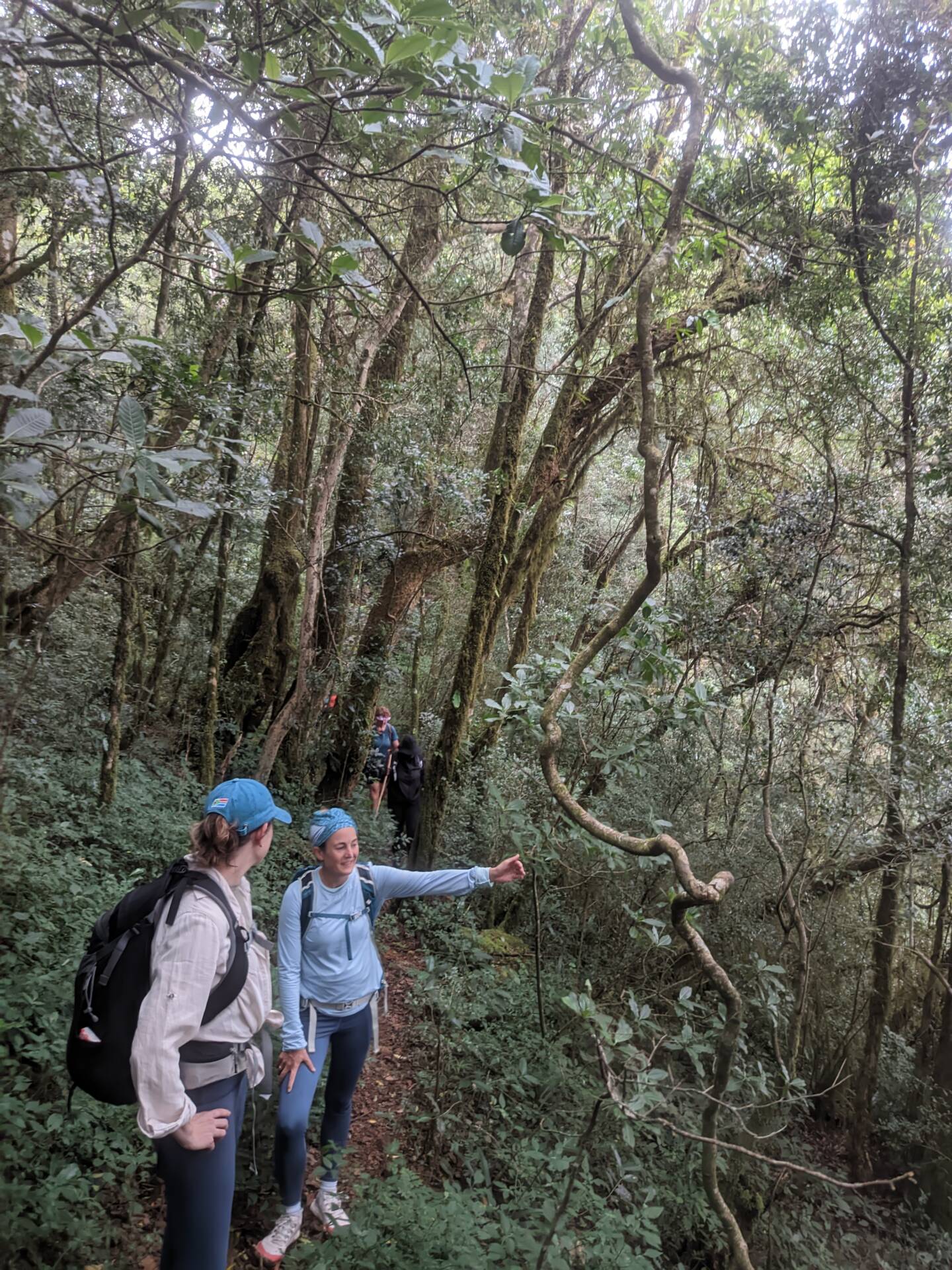
Determined to show folks the trail, we all met on a lovely Saturday morning in April at the local school where the trail starts. The turnout was great with a total of 15 enthusiastic hikers, most of us local, and a lot of non-members. Great, always good to see new faces! Fitness level was mixed, but it mattered not, as the whole idea was to challenge ourselves and make it up to the saddle, and from there, ideally, continue on the planned 15km loop. Weather was excellent with some cloud cover in the morning, not unimportant as the hike itself is already tough enough. After a bit of a meet and greet, everyone was anxious to get going, especially adventure dog Jinx.
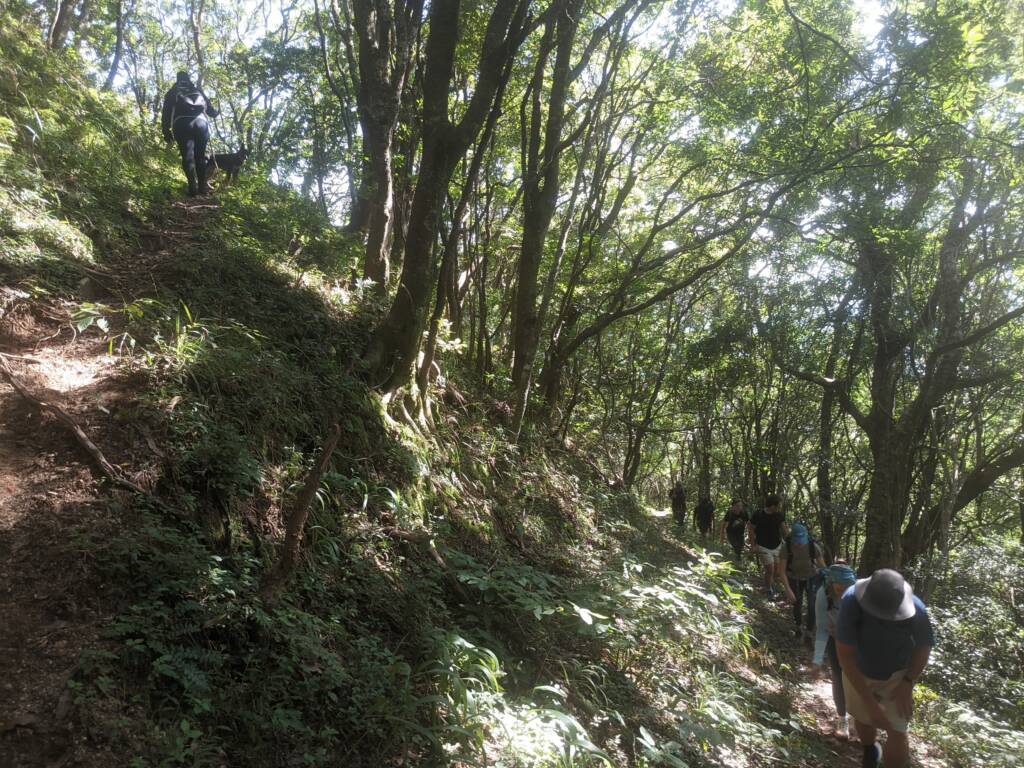
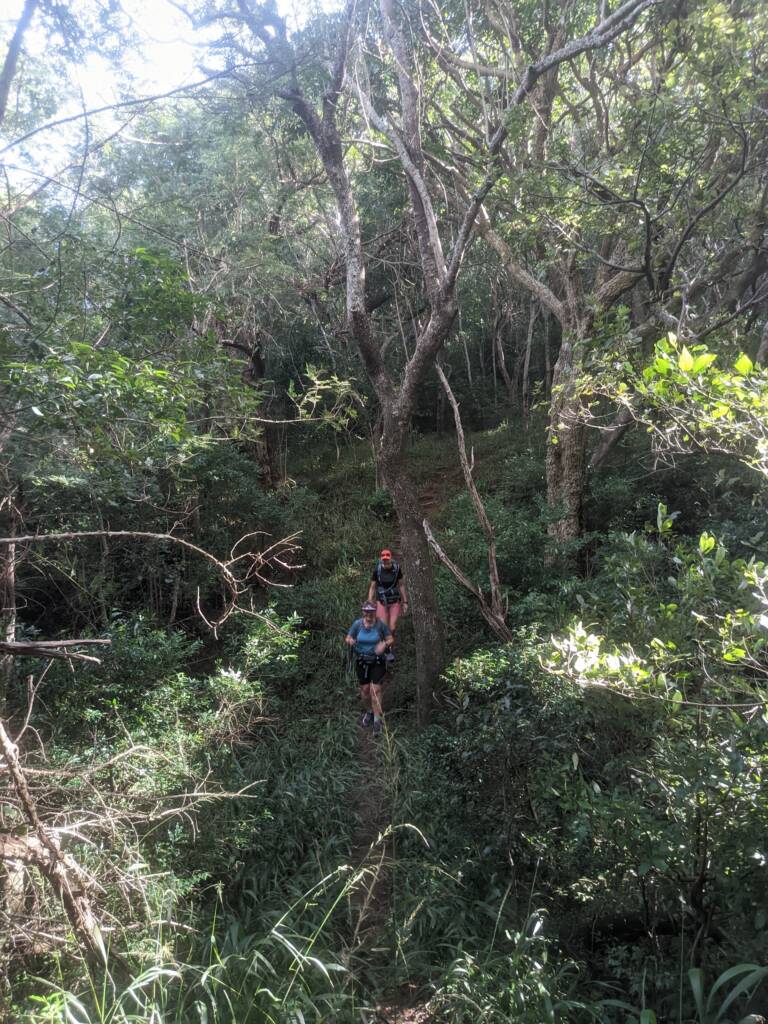
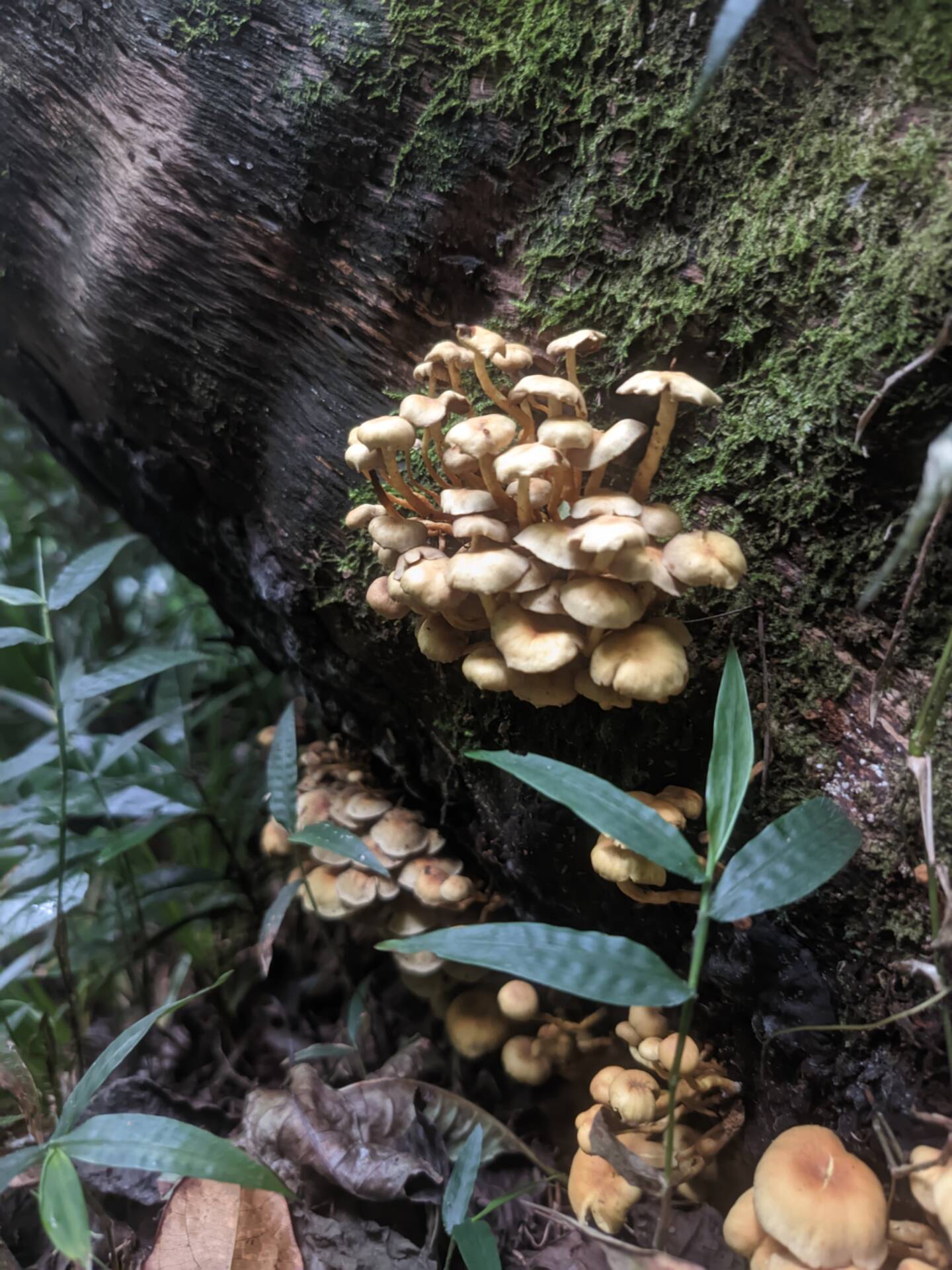
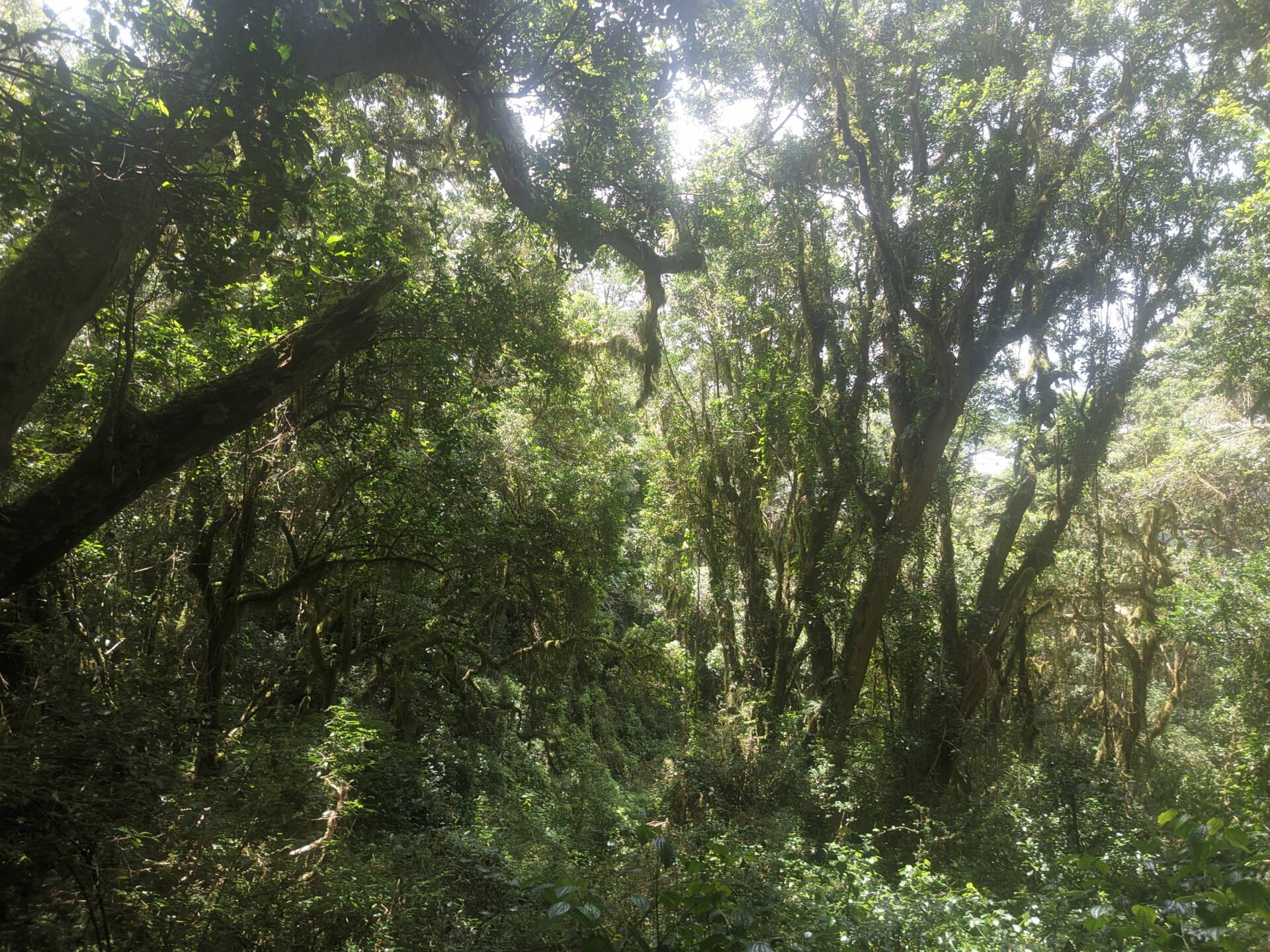
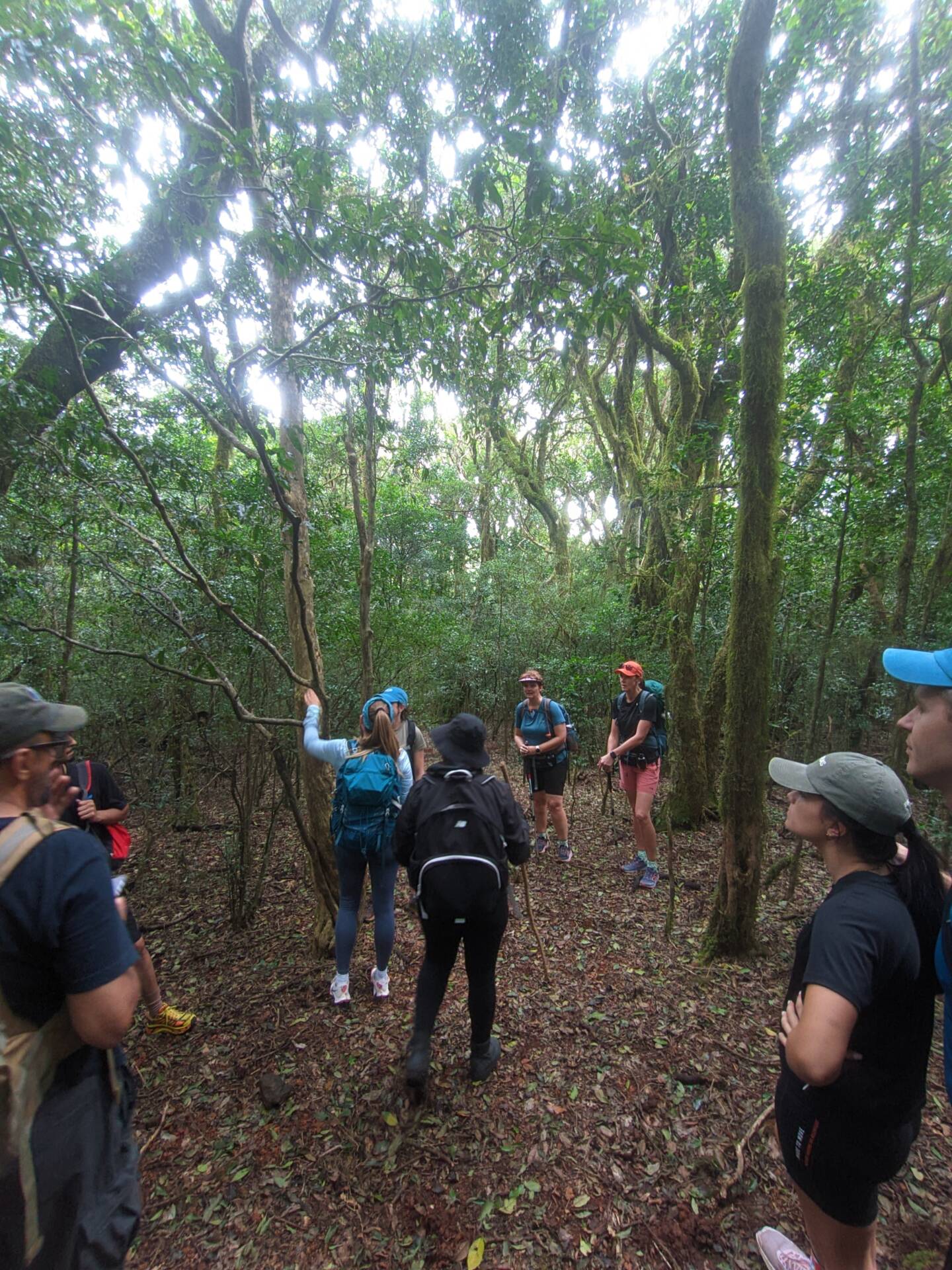
The beauty of walking up the trail lies partially in experiencing the change in biotopes. At the bottom, it is still bushveld; lots of shrubs, smaller trees and thorns. The soil is dry and rocky. With every step you take, the landscape slowly changes. Trees become bigger, more leafy. The undergrowth also changes, from dry grass to more leafy plants. Go a bit higher and suddenly ferns and mosses show up, as well as the first clivias. Once you are at the saddle, the real forest begins, proper Afromontane mistbelt forest with hundreds of clivia, streptocarp and orchids in the canopy. Old man’s beard especially gives that old-growth forest vibes. But I am getting ahead of things: at this point we’re still hiking up, and it is not all rainbows and sunshine, not just yet.
You see, at the bottom, there’s a problem: Lantana, an invasive exotic shrub, has taken over the lower slopes of the mountain. Originally introduced as a garden plant, because of what some people consider nice flowers, it has escaped the gardens and is now taking over the bush. It especially likes disturbed areas, such as trails and building sites, but from there, it just spreads, overgrowing the natural flora. Some locals keep their own streets clean of lantana, but otherwise, it is just running rampant. Recently though, a local initiative was started to finally do something about it, and it is already showing great results. You can read more about it on https://kampersrusrewilding.co.za/the-mountain.
The initiative is local and crowdfunded, so any help would be appreciated.
We continue up the trail. A few months ago this would be a green wall of Lantana, with a narrow trail kept open by the weekly trail running crew, but now, it’s open and cleared. There’s even views to be had! With this group’s composition, we’re spreading out quickly, but we try to wait for each other wherever possible. The surroundings are getting greener with every step up the steep trail, and soon we hit the lower forest proper. We tackle one switchback after the other, going past the big pine trees, another invasive species that does not belong in this indigenous forest. As per tradition, we stop at the rockfall to look at the view and wait for everyone to catch up. After about 2.5 hours we hit the ‘top’, the end of the steep trail. Time for a break, but also decision time: who will continue for the 15k loop, and who is ready to return?
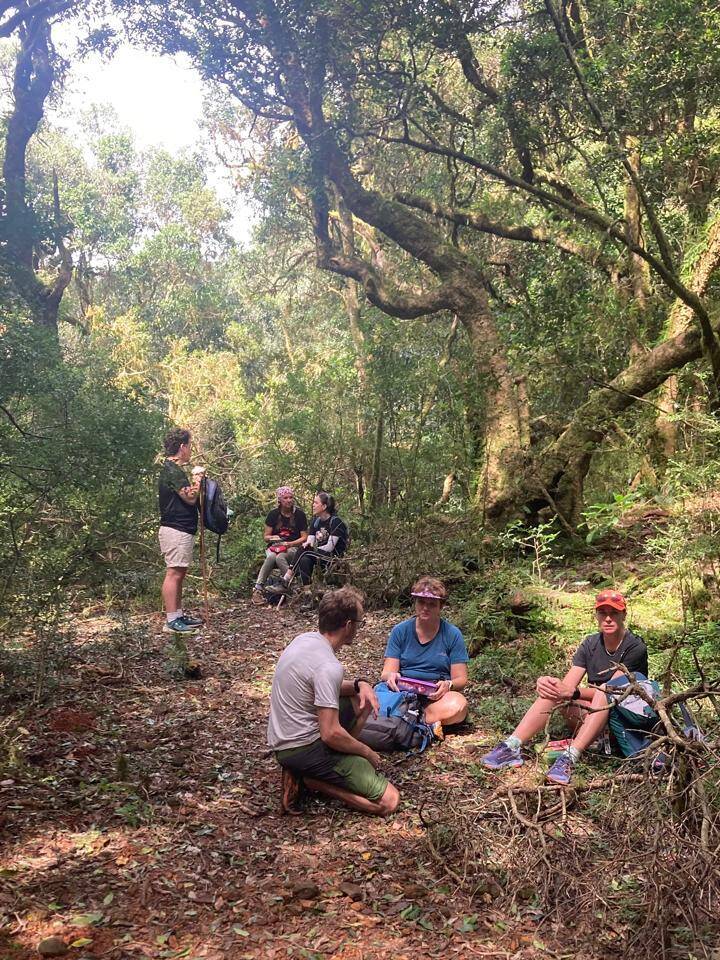
As it turns out, most of us would continue. The hike up wasn’t easy, but the promise of the worst climb being over and the beauty of the forest was tempting enough. This was exactly what the trail offered for the rest of the day. The trail follows the cliffs in an almost triangular shape, never far from the edge. The first section has great views of the lowveld, while standing quite exposed to the depths below. The section at the back of the ridge is more foresty, with big trees and less undergrowth due to the thick canopy; as good a place as any to have some lunch. While looking at the time, the go-ahead was given to some to move ahead and finish the trail on their own. Luckily this part was marked so it was easy enough to find the way back to the car. The rest would finish the trail at their own pace. No one was forced to be home late, and no one had to rush to keep up: everybody wins.
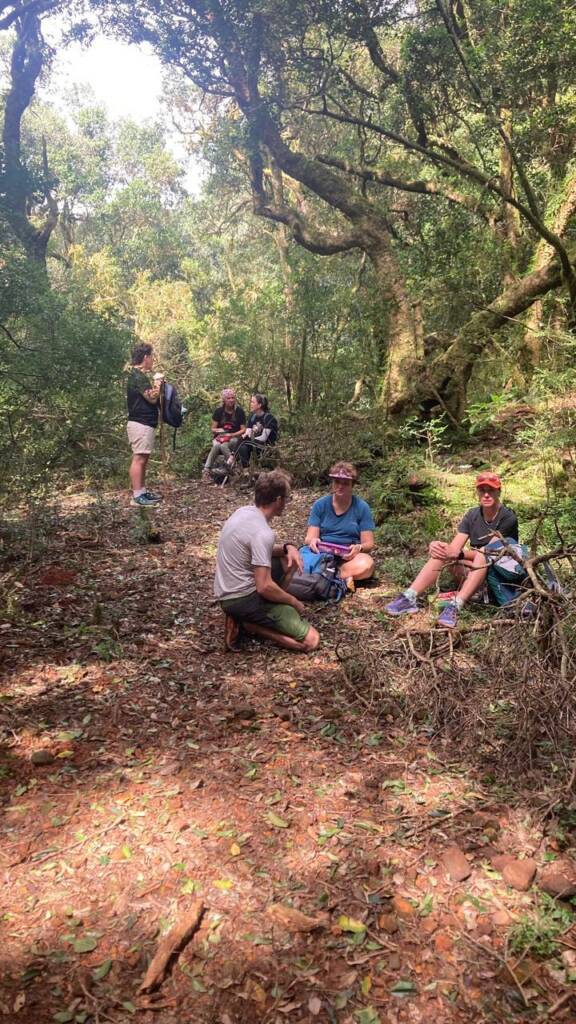
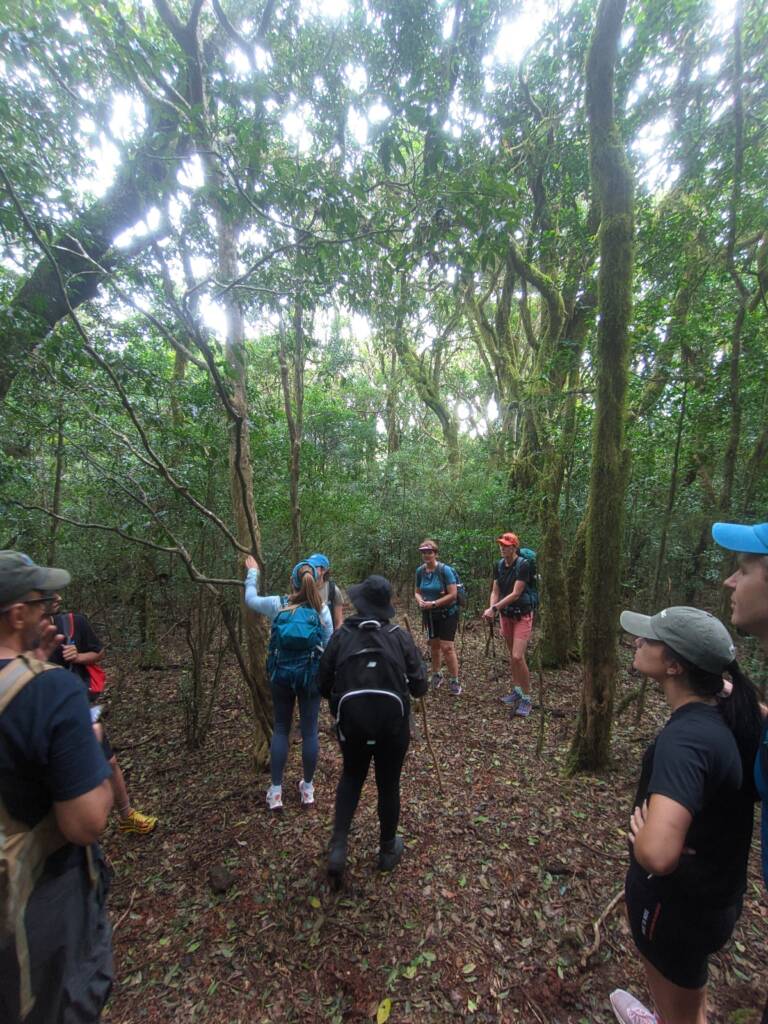
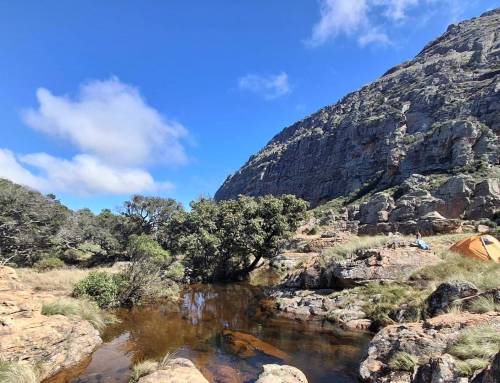
The third section of the loop is different again, with much more water, streams, and quite a bit more technical terrain. Though there were still quite a few climbs, the spirit remained high, even when temporary losing a shoe due to the mud, or should I say, especially when losing said shoe?
We were now getting close to the saddle again, close to the main trail, but first a shortcut through the open, grass- and wetland area. Most of us made it all the way without getting their shoes wet, something that would’ve been impossible a few months ago. All part of the fun though, and we were close to the downclimb anyway. A quick rest here, before we would start the 4km trail down, same way we came up. Different paces and afternoon plans made the group stretch out and finally split up again. In the end, a good 8.5 hours after starting, the last few of us got back to the cars. What a day it was though: good exercise, meeting new people and just spending time out in nature.
Next time we’re hiking up Mariepskop will be an even more challenging one: from the bottom all the way to the peak, so keep an eye out for that one!
Written by: Marcel Span